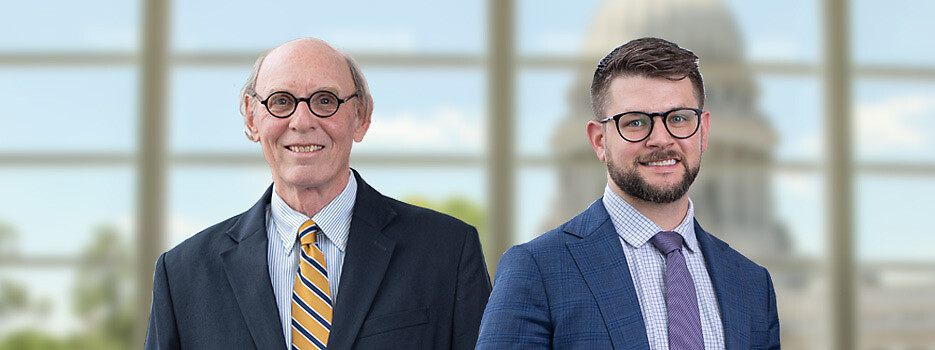
Boardman Clark Welcomes Attorneys Joseph Hasler and Maximilian Buckner
Boardman Clark is proud to announce that attorneys Joseph Hasler and Maximilian Buckner, formerly of LaRowe Gerlach LLP in Reedsburg, have joined the firm. With the arrival of Joe and Max, Boardman Clark also announced the opening of a new Reedsburg office. The firm now maintains offices in Madison, Baraboo, Belleville, Fennimore, Lodi, Poynette, and Reedsburg.
Joe and Max both join Boardman Clark with extensive experience and established practices, particularly in the areas of Real Estate and Land Use. Joe has unique experience with niche issues related to tourism, recreation and hospitality, short-term rentals, elections, and intergovernment relations. Max represents municipalities, businesses, and individuals, with a focus on general municipal law, municipal prosecutions, litigation, and real estate.
“We are excited for this next chapter in our practices,” Hasler says. “Max and I have developed many valued relationships in Reedsburg and the surrounding communities, and we are looking forward to continuing that work with Boardman Clark, who shares a long history serving the area.”
“Joe and Max are proven attorneys who can provide immediate benefit to the variety of clients we serve,” says Baraboo-based Boardman Clark attorney Jeff Storch. “We are very happy to expand our Sauk County team.”
Joe and Max will work primarily out of the firm’s Baraboo and Reedsburg offices. Meetings at the new Reedsburg office, located at 158 East Main Street, are available by appointment. To contact a member of the firm or to learn more about the firm’s services, visit BoardmanClark.com.